
INTRODUCTION TO C PROGRAMMING LANGUAGES
The C programming language, developed in 1972 by Dennis Ritchie at Bell Labs, is one of the most important and influential programming languages in the history of computer science. It was designed as a tool for implementing the UNIX operating system, but it quickly spread to other areas thanks to its efficiency and versatility.The main features of C include:
- Low-level access: Allows working directly with hardware and memory, making it suitable for system programming.
- Portability: C is designed to allow writing code that can be easily ported to different architectures.
- Simplicity and flexibility: Although it requires careful resource management, C provides enough flexibility to solve a variety of problems.
About the C programming language
C is a general programming language that is used for a wide range of applications from operating systems such as Windows and iOS for software that is used to create 3D movies.C programming is very efficient. This is the main reason why he is very popular despite having more than 40 years. Standard C programs are portable. A source code written in one system runs in another operating system without any change. As said, it is a good language to start learning a program.
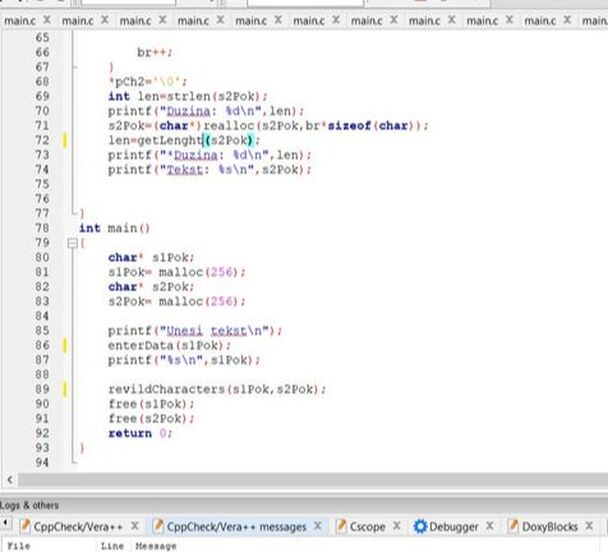
Figure 1: Introducing to C programming language - example
Why use C?
C was initially used for system development work, particularly for programs that make up an operating system. C was adopted as a system development language because it produces code that runs almost as fast as code written in assembly language. Some examples of C usage include -
- Operating systems
- Compilers
- Assemblers
- Text editors
- Network drivers
- Modern programs
- Databases
Where the C programming language is used today
The C language is still widely used in many areas of software development because of its efficiency, low level of abstraction, and closeness to hardware. Here are some key areas where C is used today:1. Operating systems:
- Many operating systems, including Unix, Linux, and parts of Windows, are written in C. The Linux kernel, for example, is mostly written in C.
2. Embedded systems:
- C is dominant in the development of firmware and software for embedded systems, such as microcontrollers, sensors and various industrial and consumer electronics.
3. System software:
- Compilers, interpreters, assemblers, and even some parts of the runtime environment of other programming languages are often implemented in C because of its efficiency and control over hardware.
4. Development of databases:
- Many databases, such as MySQL and PostgreSQL, are written in C, which allows them a high degree of performance and optimization.
5. Computer games and graphics:
- C is used in the development of games and graphics engines, where speed is key. Many popular graphics engines such as Unity (uses C++) and Unreal Engine (uses C++) have components written in C.
6. Network protocols and security:
- Many network protocols and security tools are implemented in C because of the need for high performance and direct access to memory and network devices.
7. High performance computers (HPC):
- C is used in scientific research and numerical computing, where fast and efficient algorithm implementations are needed.
8. Development of drivers:
- Hardware drivers are often written in C because they require direct access to hardware resources and efficient memory management.
9. Portability:
- Programs written in C can be relatively easily ported between different platforms, which is useful for developing software that needs to run on different types of hardware.
Although newer languages such as Python, Java, and C++ have taken over many areas of software development, C remains essential for situations where performance, hardware control, and efficiency are essential.
About this tutorial
This tutorial will explain the basics needed to create both simple and competitive tasks using the most popular algorithms: e.g. string sorting, binary search, Euclidean algorithm, etc.The tutorial will also explain numerous examples created in both C and C++ variants of writing code. CodeBlock will be used as the development environment.
Given that every C program is also a C++ program, while the reverse is not true, i.e. not every C++ program is a C program, most solutions will be solved using the C++ variant in CodeBlock.
What is needed to create a C or C++ program?
In addition to the operating system, in order to be able to develop a C, as well as a C++ application, you need:- Use a text editor to write the source code of the application. It can be notepad, notepad++ or another, or the editor included in the development tool, if it is used.
- Install the appropriate compiler. Most often it is the GNU C/C++ compiler. On Windows OS it is necessary to install MinGW (www.mingw.org), which contains the mentioned compiler, while on Linux OS the mentioned compiler can be installed with the command: $ g++ -v.
- The compiler converts the original version of the code, written in a text editor or an editor of a development environment (CodeBlock, for example) into an executable version of the code.
A development tool for programming (optional), such as: dec c++, CodeBlock, VS Code, etc.
For the purposes of this tutorial, CodeBlock will be used, which can be downloaded from the website: https://www.codeblocks.org/downloads/
C vs. C++. Advantages and disadvantages
C programming languageAdvantages:
1. Simplicity:
- C is a low-level language that is easier to learn and use because of its simple syntax and less functionality.
2. Efficiency:
- Programs written in C have a high degree of performance and efficiency because they allow direct access to memory and hardware.
3. Portability:
- C is a very portable language and can be used on almost any platform with minimal code changes.
4. Wide use:
- C is the basis of many other programming languages, which makes learning those languages easier. Many systems and applications are written in C, including operating systems and embedded systems.
Flaws
1. Limited support for object-oriented programming:
- C does not have native support for object-oriented programming (OOP), which can make it difficult to organize and maintain larger projects.
2. Lack of abstraction:
- C programmers must manage memory manually, which increases the risk of errors such as memory leaks and buffer overflows.
3. Lack of a standard library for modern functionalities:
- C has a relatively limited standard library compared to more modern languages, which can require writing more code to implement certain functionalities.C++ programming language
Advantages
1. Support for Object Oriented Programming (OOP):
- C++ adds support for classes, inheritance, polymorphism, and encapsulation, which allows for better code organization and modularity.
2. Standard Library (STL):
- C++ comes with a rich standard library that includes containers, algorithms and functions for working with strings, which significantly speeds up software development.
3. Support for multiple paradigms:
- In addition to OOP, C++ supports procedural, functional and generic programming, providing greater flexibility in software development.
4. RAII (Resource Acquisition Is Initialization):
- C++ uses the RAII idiom for resource management, which facilitates proper management of memory and other resources.
Flaws:
1. Complexity:
- C++ is a more complex language compared to C because of the additional functionalities and features, which can make it difficult to learn and use.
2. Higher compilation requirements:
- Programs written in C++ often require more time to compile due to complex functionalities and rich standard library.
3. Potential for more complex errors:
- Given that C++ provides many powerful tools, inadequate use of those tools can lead to complex errors that are more difficult to detect and correct.Conclusion:
- C is ideal for systems and applications that require direct hardware access and maximum efficiency, such as operating systems, embedded systems, and hardware drivers.
- C++ is suitable for more complex applications that require better code organization and flexibility, such as graphics applications, game development, financial systems software, and other applications that can take advantage of object-oriented programming and a rich standard library.
The choice between C and C++ depends on the specific requirements of the project and the preferences of the programmer.For concrete examples and syntax of the C programming language, see the following pages of the tutorial, where the basic elements of the language are explained in detail.
Versions of the C Programming Language
The C programming language has undergone several key updates throughout its history, with each version introducing significant improvements, new features, and adaptations to modern programming needs.C89/C90 (ANSI C)
- The first standardized version of the C language.
- Adopted by ANSI (American National Standards Institute) in 1989 and later by ISO (International Organization for Standardization) in 1990.
- Focused on code stability and portability.
- Includes 32 reserved keywords that define the language's core functionality.
C99
- Released in 1999, this standard introduced numerous enhancements:
- Support for inline functions.
- Declarations anywhere in a block of code.
- New data types, such as long long int and complex.
- For loop initialization in the loop header.
- The number of reserved keywords increased to 37, including additions like restrict and _Bool.
C11
- Released in 2011, with a focus on safety and flexibility:
- Introduction of atomic operations and multithreading support.
- New keywords like _Generic.
- Memory allocation improvements, such as the aligned_alloc function.
- Several reserved keywords were added, such as _Atomic and _Thread_local, bringing the total to 40.
C17
- Published in 2017 as a minor revision to C11.
- Primarily focused on bug fixes and performance improvements.
- No new reserved keywords were introduced.
C23
- The latest version of the language, released in 2023.
- Emphasizes modernizing the language and expanding capabilities:
- Introduction of new syntactic features.
- Removal of deprecated functions.
- Addition of new keywords and library functions.
Reserved Keywords in C
Reserved keywords in C are predefined words with specific meanings that cannot be used as identifiers in your program.
The following table shows the evolution of reserved keywords across different versions of the C language:
| Version | Number of Reserved Keywords | Example Keywords |
|---|---|---|
| C89/C90 | 32 | auto, break, case, char |
| C99 | 37 | inline, restrict, _Bool |
| C11 | 40 | _Atomic, _Static_assert |
| C17 | 40 | (same as C11) |
| C23 | 43+ (estimated) | New additions under review |
How to Stay Updated?
Programmers who wish to stay current with the development of the C language should:- Follow official standards published by ISO.
- Regularly consult the documentation for their compiler (e.g., GCC, Clang, MSVC).
- Learn about new features and keywords through courses and specialized guides.
Next
Basics C and C++>|